Source Jungle Theme Indoor Play Equipment for Parks Schools
Find 30 Jungle Theme Indoor Play Equipment options for amusement parks, schools, and kindergartens. Compare specifications including age suitability, materials, and customization features from verified suppliers.
Key considerations
Products List


Play Centre Indoor Play Equipment Indoor Toddler Playground Jungle Theme
$15000.00 - $25000.00
MOQ: 1 Pieces


New Jungle Theme Indoor Kids Games Amusement Park Playground Equipment
$5500.00 - $6000.00
MOQ: 1 Sets


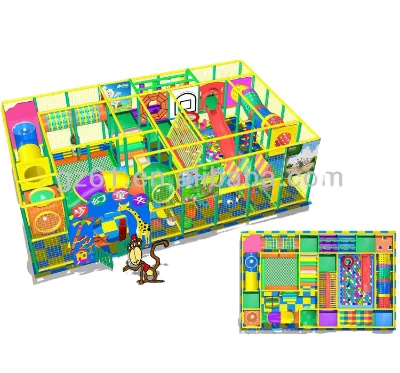
Jungle Theme Indoor Playground Equipment Children Soft Games Indoor Kids Play Room Design
$1000.00 - $10000.00
MOQ: 45 Minimum

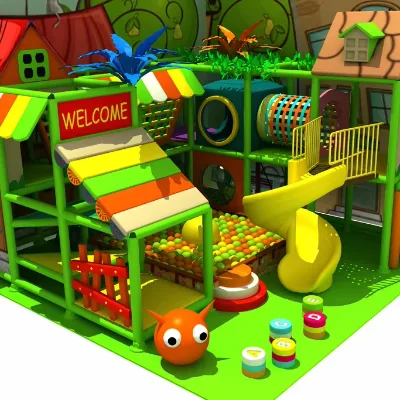
Commercial Jungle-Themed Junior and Toddler Indoor Playground Children's Play Center Equipment
$150.00 - $280.00
MOQ: 20 Square Meters


Comprehensive Sourcing Guide
Strategic Sourcing Guide for Jungle Theme Indoor Play Equipment
Procuring Jungle Theme Indoor Play Equipment requires a disciplined approach that balances creative design with rigorous safety compliance. The market offers a diverse array of soft play structures, often characterized by vibrant jungle motifs, ocean themes, and candy-colored aesthetics. For procurement professionals, the primary objective is to identify suppliers who can deliver custom-engineered solutions that meet specific operational needs while adhering to international safety standards. This guide outlines the critical technical, compliance, and commercial factors buyers must evaluate when sourcing these complex amusement assets.
Technical Specifications and Material Composition
The foundation of any durable indoor play structure lies in its material composition and manufacturing technology. Current market observations indicate that high-quality jungle theme equipment predominantly utilizes Linear Low-Density Polyethylene (LLDPE) for plastic components. This material is selected for its specific properties, including anti-UV resistance, anti-static capabilities, and anti-crack performance, which are essential for maintaining the structural integrity and visual appeal of the equipment over time. The manufacturing process often involves rotational moulding, a technique that ensures uniform wall thickness and high impact resistance, crucial for withstanding the dynamic loads of children's play.
When evaluating technical specifications, buyers must scrutinize the dimensions and structural design. The size of the equipment is frequently customizable, allowing for integration into various facility layouts. However, specific models may have defined parameters, such as enclosure heights exceeding 2.5 meters or dimensions greater than 16 feet. The allowable passenger capacity is another critical metric; some units are rated for a maximum jumping weight of 100kg or more, ensuring safety during high-activity play. The shape of the equipment, often square or custom-configured, must align with the available floor space of the intended venue.
Furthermore, the lifespan of the equipment is a key technical consideration. Under normal usage conditions, these structures are designed to last between 5 to 8 years. This longevity is contingent upon the quality of the raw materials and the robustness of the assembly. The product description often highlights advantages such as being safe, strong, anti-toxic, fade-less, and anti-septic. These attributes are not merely marketing terms but are derived from the specific material treatments and design choices made during the production phase. Buyers should verify that the "anti-toxic" claim is supported by the material safety data sheets provided by the manufacturer.
Compliance and Certification Verification
In the realm of children's play equipment, compliance is non-negotiable. The Jungle Theme Indoor Play Equipment market is heavily regulated, requiring suppliers to provide valid certifications that attest to the safety of their products. Observed certification standards include CE, GS, ISO, TUV, and SGS. These certifications indicate that the product has undergone rigorous testing for mechanical safety, chemical composition, and structural stability.
Buyers must verify that the certifications are current and applicable to the specific model being purchased. For instance, the presence of a CE mark suggests conformity with European health, safety, and environmental protection standards, while GS indicates German safety certification. ISO certification, particularly ISO9001:2000, reflects adherence to quality management systems, ensuring consistent production standards. The "Allowable Passenger" standard often references these certifications, implying that the equipment's capacity ratings are validated by these bodies.
It is essential to note that while some listings mention specific standards like EN 1176, this should be treated as a background reference rather than a guaranteed attribute of every listed product. Procurement teams must explicitly request the test reports and certificates for the specific batch or model they intend to purchase. Relying on general claims without verifying the documentation can lead to significant liability risks. The supplier should be able to provide a certificate that matches the product model code, such as OP-00538 or VS1-180829-183A-32, ensuring traceability and authenticity.
Cost Drivers and Pricing Structures
The pricing of Jungle Theme Indoor Play Equipment is influenced by a complex array of factors, resulting in a wide observed range from 30 to 25,000 USD. This variance is not arbitrary but is driven by the scale of the project, the complexity of the design, and the customization level required. A small, pre-fabricated unit will naturally cost significantly less than a large, custom-designed castle playground that covers a vast area and includes intricate jungle-themed elements.
Customization is a primary cost driver. The ability to tailor the style, color, and size to specific requests allows for unique designs but increases production time and material costs. The "Style or Color" attribute is often listed as "as Your Request," indicating that bespoke orders will incur higher expenses than standard catalog items. Additionally, the volume of the equipment, measured in cubic meters (Cbm), affects shipping and logistics costs. A unit with a volume of 70 Cbm will require specialized freight arrangements, impacting the total landed cost.
The Minimum Order Quantity (MOQ) also plays a role in the final price. Observed MOQs range from 1 to 50 units. Buyers purchasing a single unit may face a higher per-unit cost compared to those placing an order for a larger quantity. The production technology, such as rotational moulding, adds value but also cost, as it requires specialized machinery and skilled labor. Buyers should request detailed quotations that break down material costs, labor, customization fees, and logistics to understand the true cost drivers. Transparency in pricing is vital, as hidden costs can erode the budget allocated for the project.
Typical Applications and Venue Suitability
Jungle Theme Indoor Play Equipment is versatile and suitable for a wide range of venues. The primary applications include amusement parks, kindergartens, schools, restaurants, and supermarkets. The "Occasion" attribute explicitly lists these environments, highlighting the equipment's adaptability to different operational contexts. In an amusement park, the equipment serves as a major attraction, requiring high durability and capacity to handle large crowds. In educational settings like kindergartens and schools, the focus shifts to safety and age-appropriate design, typically targeting children aged 3 to 12 years.
The theme of the equipment, which can include jungle, ocean, pirate, candy, and space motifs, is designed to engage children and create an immersive play experience. The "Description" often refers to these structures as "Castle Playgrounds," suggesting a multi-level design that encourages exploration and physical activity. The suitability for restaurants and supermarkets indicates that these units can also function as entertainment zones to keep children occupied while parents shop or dine.
When selecting equipment for a specific venue, buyers must consider the age group and the intended usage. For example, equipment with an enclosure height of over 2.5 meters might be more appropriate for older children in a large amusement park, whereas a lower-profile design might be safer for a kindergarten. The "Usage" attribute, often listed as "Indoor," confirms that the equipment is designed for controlled environments, protecting it from weather-related degradation. Buyers should ensure that the selected equipment aligns with the specific needs and safety requirements of their target audience.
Supplier Evaluation and Production Capabilities
Evaluating potential suppliers requires a deep dive into their production capabilities and operational history. The origin of the equipment is a significant factor, with many suppliers based in Panyu, Guangzhou, China, a hub for manufacturing amusement equipment. This location suggests access to a robust supply chain and specialized manufacturing expertise. However, buyers should not rely solely on the location; they must verify the supplier's actual production capacity and quality control processes.
Key indicators of a reliable supplier include the availability of full installation maps for different parts of the equipment. This suggests a comprehensive approach to assembly, reducing the risk of errors during installation. The warranty time, typically listed as 1 year, is another critical metric. A longer warranty period often indicates the supplier's confidence in the product's durability and their commitment to after-sales support.
Suppliers should also demonstrate flexibility in their production processes. The "Productive Technology" of rotational moulding requires specific expertise, and the supplier should be able to provide evidence of their proficiency in this area. Additionally, the "Customization" attribute being available suggests that the supplier can adapt to unique design requests. Buyers should request case studies or references from previous projects to validate the supplier's claims. The ability to handle complex orders, such as those with specific model codes like TW-0213A or OP-00538-Re1, is a strong indicator of a capable manufacturer.
Quality Control and Long-Term Procurement Considerations
Quality control is paramount when procuring Jungle Theme Indoor Play Equipment. The "Advantages" listed, such as being safe, strong, anti-toxic, fade-less, and anti-septic, must be verified through independent testing. Buyers should request detailed quality control reports that cover material testing, structural integrity checks, and safety assessments. The packaging method, often described as "Cotton Inside, PVC Film Outside" or "Black Cotton with Bubble Film," is also a quality indicator, ensuring that the equipment arrives without damage.
Long-term procurement considerations involve planning for maintenance and potential upgrades. The lifespan of 5 to 8 years under normal use means that buyers should budget for periodic maintenance and potential component replacement. The "Installation" process, which includes providing a full map for different parts, should be reviewed to ensure that the installation team is well-equipped to handle the assembly. Buyers should also consider the scalability of the equipment; if the venue expands, can the existing equipment be integrated with new modules?
Furthermore, the "Standard" attribute, often listed as "for your request" or "customized," highlights the need for clear communication between the buyer and the supplier. Establishing a clear set of standards and specifications at the outset of the project is essential to avoid misunderstandings and ensure that the final product meets all requirements. Buyers should also consider the environmental impact of the materials used, ensuring that the LLDPE and PVC components are sourced responsibly. By focusing on these long-term factors, buyers can ensure a sustainable and successful procurement strategy for Jungle Theme Indoor Play Equipment.
Comparative Analysis of Key Attributes
To facilitate decision-making, the following table summarizes the key attributes observed in the market for Jungle Theme Indoor Play Equipment. This comparison helps buyers quickly identify the most relevant features for their specific needs.
| Attribute Category | Key Observation | Verification Requirement |
|---|---|---|
| Material | LLDPE, PVC, Anti-UV, Anti-Static | Request Material Safety Data Sheets |
| Certification | CE, GS, ISO, TUV, SGS | Verify current certificates for specific model |
| Customization | Available (Size, Color, Theme) | Confirm design feasibility and lead time |
| Lifespan | 5-8 Years (Normal Use) | Review maintenance guidelines |
| Target Age | 3-12 Years, Children | Ensure age-appropriate design |
| Origin | Panyu, Guangzhou, China | Verify supplier location and logistics |
| Warranty | 1 Year | Clarify warranty terms and exclusions |
| Installation | Full Map Provided | Confirm installation team expertise |
This structured approach ensures that buyers can navigate the complexities of sourcing Jungle Theme Indoor Play Equipment with confidence. By focusing on technical specifications, compliance, cost drivers, and supplier capabilities, procurement professionals can secure high-quality assets that meet the safety and operational needs of their venues.
FAQs
What certifications does Jungle Theme Indoor Play Equipment have?
The equipment holds CE, GS, ISO, TUV, and SGS certifications. These verify safety and quality compliance for international markets, ensuring the product meets rigorous standards for children's amusement structures.
How long does Jungle Theme Indoor Play Equipment last?
Under normal use, the equipment has a lifespan of 5 to 8 years. This durability depends on the use of high-quality LLDPE plastic and proper maintenance within the intended indoor environment.
Can Jungle Theme Indoor Play Equipment be customized?
Yes, customization is available for style, color, and size. Buyers can request specific designs like jungle or ocean themes, allowing the equipment to fit unique venue layouts and aesthetic preferences.
Which materials are used for Jungle Theme Indoor Play Equipment?
The plastic parts are made from LLDPE with anti-UV, anti-static, and anti-crack properties. This material ensures the structure is safe, strong, and resistant to fading or toxicity over time.
What is the MOQ for Jungle Theme Indoor Play Equipment?
The minimum order quantity ranges from 1 to 50 units. This flexibility allows buyers to purchase single units or larger batches depending on their specific project scale and budget requirements.
How is Jungle Theme Indoor Play Equipment packed for shipping?
Packing typically involves cotton inside with PVC film outside or bubble film with PP film. This protective layering ensures the equipment arrives without damage during transit to the destination.
What is the installation process for Jungle Theme Indoor Play Equipment?
Installation includes a full map provided for different parts of the structure. This detailed guide assists in assembling the equipment correctly, ensuring safety and structural integrity upon completion.